

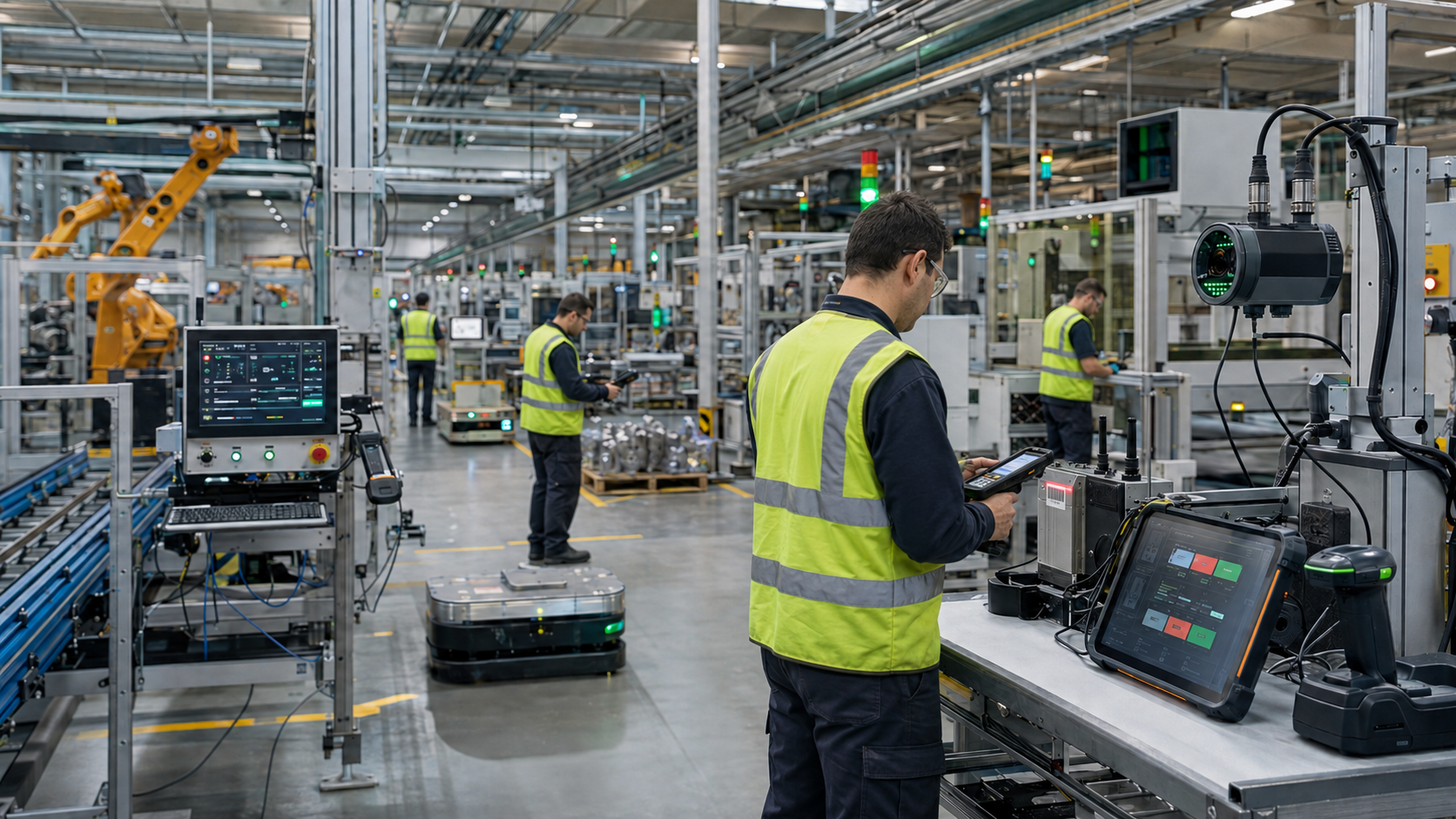
A warehouse operator scans a pallet of electric motors in the outdoor yard before delivering it to the production floor. The scanner beeps, the pallet moves, and work continues.
But at that moment, the scanner has briefly lost connectivity as it is beyond the reach of the local Wi-Fi connection. Instead of updating the warehouse management system immediately, the transaction sits in a local buffer, waiting for a signal.
Ten minutes later, the production planner checks inventory. The system still shows the motors sitting in the yard, so another operator is sent to retrieve them. The warehouse team spends valuable time searching for stock that isn't missing at all. It's already on the production floor. The scan simply hadn't reached the system yet.
Nothing failed. The data eventually synced. But for those ten minutes, the business was making decisions based on outdated information.
Handheld scanners keep manufacturing moving
From receiving raw materials to shipping finished products, handheld scanners are one of the most important tools in manufacturing. Every scan updates inventory, confirms material movements, supports traceability and keeps production aligned with what's happening on the production floor.
Many manufacturers connect these devices to their internal network, and for fixed indoor operations that's often enough. But in many facilities, scanners don't stay in one place. They move between outdoor storage areas, loading bays, warehouses and production halls throughout the day. Operators shouldn't have to think about where coverage starts and ends. Their focus should be on moving materials, not finding a signal.
When connectivity becomes inconsistent, the problem isn't that scanners stop working. It's that the data they collect doesn't always arrive when it's needed, making the data not 100% credible.
The problem: Small delays create bigger operational problems
Every scan influences replenishment, production planning and order fulfilment. When updates are delayed, planners lose visibility, operators waste time searching for products that have already moved, and confidence in inventory accuracy begins to erode. Teams start double-checking stock, repeating scans or making phone calls to confirm information that should already be available in the system.
For manufacturers focused on lean operations, those small interruptions quickly become unnecessary cost.
The solution: Always-on connectivity
For many manufacturers, equipping handheld scanners with M2M SIM cards isn't about replacing the factory network. It's about removing operational friction. Devices arrive on site already connected, so they can be deployed immediately without waiting for Wi-Fi credentials, network configuration or IT support. For manufacturers rolling out hundreds of scanners across multiple sites, that means faster deployment and less work for internal teams.
Once in operation, those same SIM cards ensure scanners stay connected wherever work takes place, whether that's in an outdoor receiving yard, a loading bay, a warehouse or on the production floor.
This is where Stellar comes in. Stellar offers resilient connectivity across networks by orchestrating multiple communication technologies into a single, continuous internet connection. It enables reliable, high-performance connectivity in environments where traditional networks fail, including industrial operations, mobility and critical infrastructure.
This challenge goes beyond scanners
Handheld scanners are just one example of how manufacturing is becoming increasingly connected. The same need for resilient connectivity applies to autonomous mobile robots transporting materials between production areas, industrial tablets used for quality inspections and maintenance, and every handheld device keeping inventory, production status and operational data accurate to the second.
As manufacturers continue to automate their operations, reliable connectivity becomes more than supporting infrastructure. It becomes the foundation that keeps production moving, inventory accurate and every connected system working from the same version of reality.
Share this content:
A backup connection is only part of the solution