

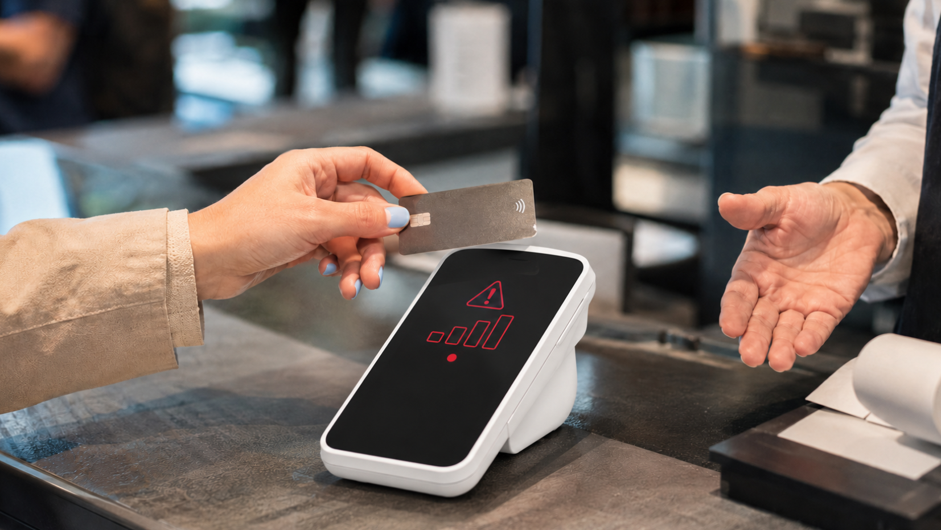
When connectivity fails, the first alert might appear on an IT dashboard. The real impact is felt somewhere else.
A payment can't be processed. A warehouse loses visibility of inventory. A remote operator can't monitor a critical asset. A security team loses access to live camera feeds. The outage may only last a few seconds, but the disruption to operations can continue long after the connection returns.
That's because connectivity is no longer just an IT service. It's part of how modern businesses operate.
Every outage affects more than the network
Today's organizations depend on connectivity at every level. Retailers rely on it to process payments and manage inventory. Logistics companies use it to track shipments and coordinate fleets. Critical infrastructure depends on it for monitoring, control, and remote operations.
When a connection fails, it's rarely just "the internet is down." Different systems fail at different times, teams fall back on manual processes, customers experience delays, and recovering every application often takes longer than restoring the connection itself.
The cost isn't measured only in downtime. It's measured in lost productivity, interrupted services, delayed decisions, and frustrated customers.
Resilience is more than a backup connection
Adding a second network is a good start, but resilience requires more than redundancy. If someone has to notice the outage, decide when to switch connections, and manually restore services afterwards, the business is still exposed.
True resilience comes from combining multiple terrestrial and satellite networks, maintaining visibility across them, and automatically adapting as network conditions change. The result is fewer interruptions, faster recovery, and far less operational complexity.
Keeping operations moving
At Stellar, that's exactly the challenge we solve. Our connectivity orchestration platform, powered by STEER® and delivered through GLOBBLE® or existing hardware, combines multiple terrestrial and satellite networks into a single resilient connection. Instead of relying on one provider or one technology, organizations retain continuous connectivity even as conditions change.
Because the goal isn't simply to keep a network online. It's to keep the business running.
Share this content:
Sharing expertise to strengthen open source: Stellar and Google Summer of Code 2026
A backup connection is only part of the solution