

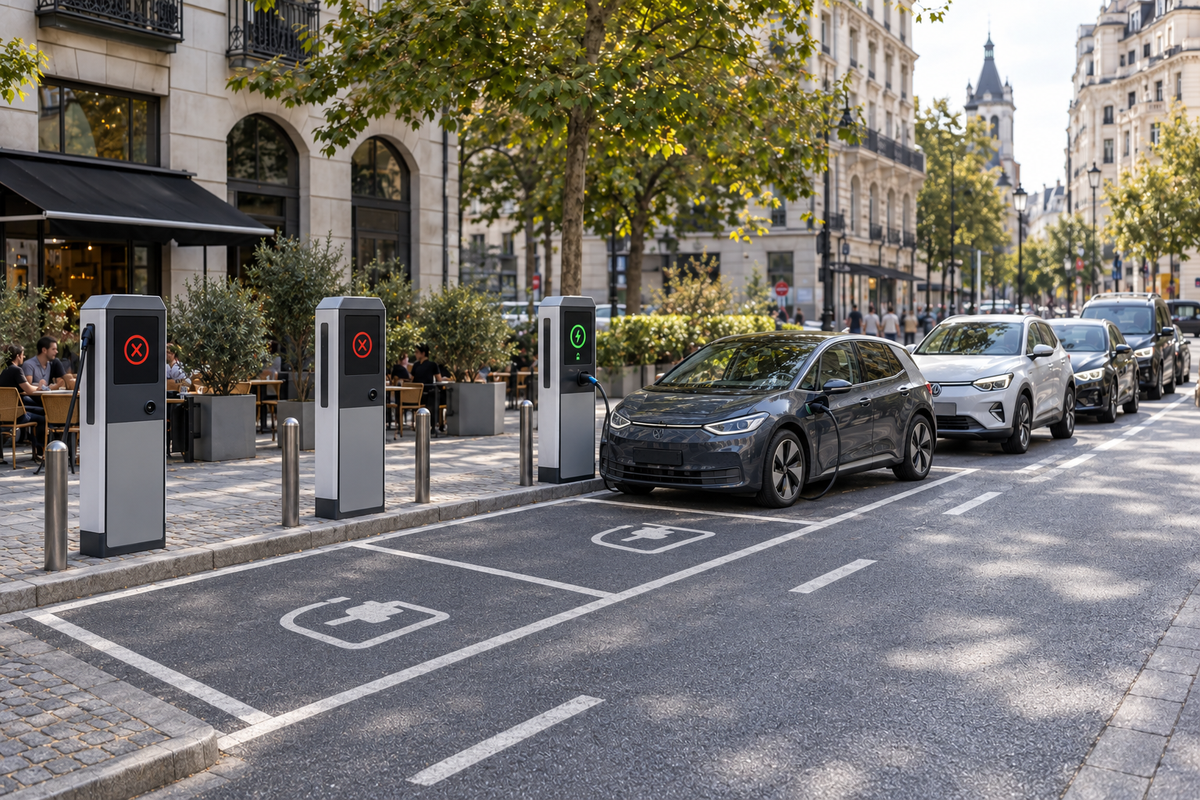
An EV driver arrives at a charging station, plugs in, and expects one simple thing: for it to work. But the charger cannot connect to its backend. The payment cannot be authorized, its status cannot be verified, and remote support has limited visibility into what is happening.
No matter where the issue is to the driver, the conclusion is simple: the charger is broken. Behind that conclusion, however, is a much more complicated reality.
The problem: Everyone gets blamed for a connectivity problem
EV charging infrastructure involves an ecosystem of manufacturers, distributors, operators, installers, connectivity providers, and customers. When something goes wrong, responsibility can quickly become unclear.
The manufacturer may be blamed because their name is on the hardware. Yet if the charger is offline, they may have limited or no remote access to diagnose it. The distributor can face the same frustration, trying to support a product without visibility into what is actually happening at the device.
Connectivity can also remain in the hands of the end customer. If that customer selects a provider with insufficient coverage at a particular location, every other player can end up dealing with the consequences. The charger might be functioning perfectly, but without connectivity, it can effectively disappear from the systems designed to monitor and manage it.
The solution: M2M connectivity built for critical infrastructure
This is why connectivity for EV charging cannot be treated as an afterthought. A device connected to one network still leaves the charger dependent on that network's availability, coverage, and congestion.
A resilient connectivity solution needs to work across networks and intelligently prioritize connectivity, removing dependency on a single provider. Stellar's connectivity platform provides access to more than 550 cellular networks globally, alongside real-time management through APIs and dashboards.
The benefits extend across the entire EV charging ecosystem:
- Manufacturers gain visibility to remotely monitor and troubleshoot connected chargers.
- Distributors can support customers more effectively instead of diagnosing devices with limited information.
- Operators reduce downtime by avoiding dependence on one network.
- Customers get a charger that works when they need it, regardless of which network happens to perform best at that location.
Powered by Stellar: connectivity that does not depend on one network
Stellar offers resilient connectivity across networks by orchestrating multiple communication technologies into a single, continuous internet connection. It enables reliable, high-performance connectivity in environments where traditional networks fail, including mobility, enterprise, and government.
For EV charging, that resilience matters. As chargers become smarter and more integrated into energy, payment, fleet, and management systems, being offline is no longer a minor inconvenience.
A smart charger is only as smart as its ability to communicate. The future of EV charging therefore depends not only on better charging hardware, but on making sure connectivity never becomes its weakest link.
Share this content:
When everything depends on connectivity, one connection is not enough