

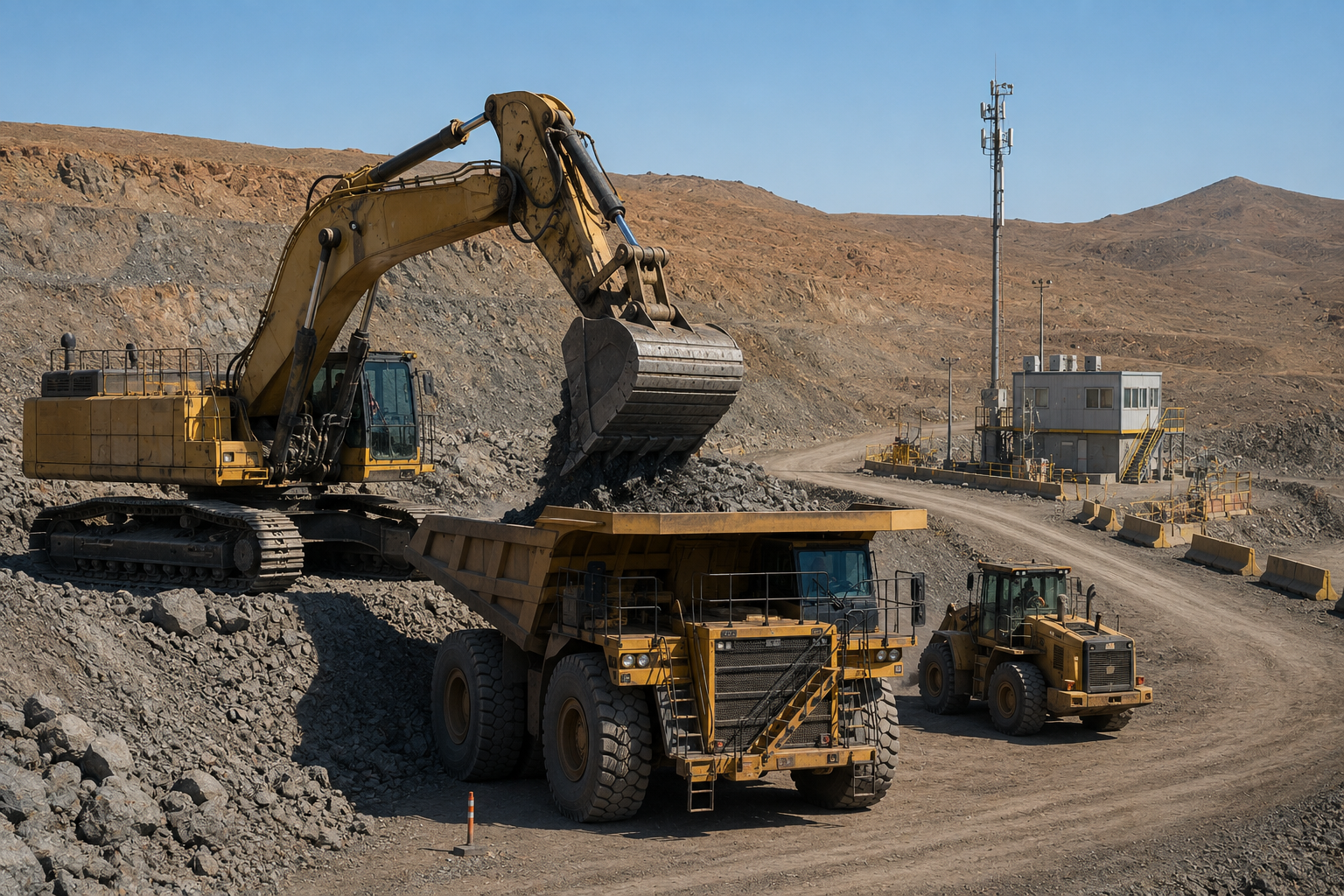
A mining operation can sit hundreds of kilometres from the infrastructure most businesses take for granted. Yet equipment is moving, systems are generating data, and headquarters still needs visibility into what is happening on site. Being remote cannot mean being removed.
For modern mining operations, connectivity has become part of the operational infrastructure. Information from equipment, sensors, vehicles, cameras, and monitoring systems needs to travel between the mine and central teams. As mining becomes more automated and data-driven, that digital link becomes increasingly important.
The problem: Massive operations in the middle of nowhere
Mining creates an obvious connectivity challenge. Some of the largest and most complex industrial sites operate in areas where cellular coverage is inconsistent, and relying exclusively on satellite still means depending on a single type of connection.
A dropped connection can leave headquarters with a gap in operational visibility, and communication between the two gets more difficult. The problem is not necessarily that no networks are available. It is that no single network can be expected to perform everywhere, all the time.
The solution: Use every network available
This is exactly the type of environment GLOBBLE® is designed for. Stellar’s smart multi-modem router combines terrestrial, and satellite connectivity into one resilient connection. Powered by STEER®, it uses multi-network orchestration to keep information moving as network conditions change. The result is connectivity designed around the reality of the mine, rather than expecting the mine to fit the limitations of a network. The mining deployment does not need to concern itself with which individual network is providing the connection at a particular moment.
The role of connectivity here is clear:
- operational visibility: Remote equipment and systems can continue sending information to central teams.
- resilience: Losing or degrading one network does not mean losing the connection.
- remote management: Connected assets can be monitored across large and difficult-to-access sites.
- scalability: New sites can use the same connectivity approach without designing operations around each particular local network.
- centralized control: Connectivity across deployments can be monitored and managed from one place.
As mining operations become more automated, distributed, and intelligent, the connection between remote deployments and headquarters will only become more important. A mine may need to operate in the middle of nowhere. Its data does not need to stay there.
Share this content:
Your passenger counters know what is happening. Do you?
Satellite or cellular? Why choose?