

Sovereignty is often discussed in terms of geography. Where is a provider headquartered? Where is data stored? Who owns the infrastructure? Those questions matter. But for the organizations responsible for keeping essential services running, sovereignty is ultimately about control.
Who decides what happens when a critical supplier becomes unavailable? How quickly can an organization move away from a degraded or compromised dependency? Can operations continue if one network, one provider, or even one region is disrupted?
That is where sovereignty becomes an operational challenge.
Modern organizations rarely depend on a single technology. Remote sites combine fibre, cellular, and satellite. Vehicles move between operators throughout the day. Critical infrastructure relies on hardware, cloud platforms, and connectivity from multiple suppliers. Each component may perform well on its own, but the real risk lies in the dependencies between them.
This is why resilience has become central to conversations around sovereignty. Regulations that are in place reinforce the need for business continuity, supply chain resilience, and the ability to recover from disruption. The question is no longer simply Which provider do we trust? It is How much operational control do we retain when conditions change?
Sovereignty does not mean owning every network or replacing every supplier. It means avoiding unnecessary dependence on any single one. Organizations need the flexibility to use the best available infrastructure while retaining the freedom to adapt as circumstances evolve.
That requires four things:
- Diversity with multiple connectivity options available.
- Visibility so teams understand how infrastructure is performing.
- Control through policies that adapt automatically as conditions change.
- Portability so changing providers or infrastructure does not require rebuilding the entire operating model.
The real test of sovereignty is not during procurement. It is during an incident. Can traffic be redirected without sending someone to site? Can operations continue while a provider experiences an outage? Can teams identify the source of a problem quickly enough to maintain service?
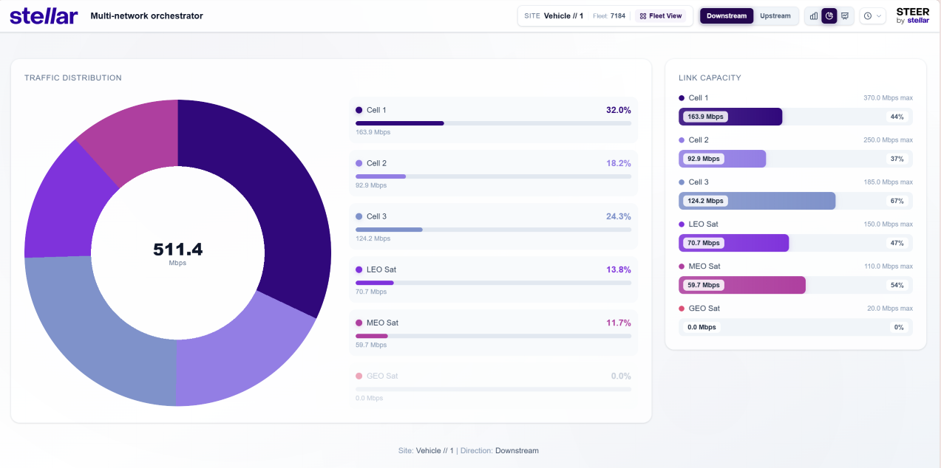
At Stellar, we believe sovereignty is strengthened through resilient architecture, not dependency. By orchestrating terrestrial and satellite networks into a single, resilient connection, organizations retain the freedom to choose, adapt, and continue operating as conditions change.
Because sovereignty is not about relying on a single "trusted" network. It is about ensuring no single network can dictate whether your operations continue.
Share this content:
How resilient connectivity is enabling autonomous medical drone operations
When 99% coverage is not enough for autonomous mobility